Basing Your Miniatures
Basing completes a miniature, usually by creating a natural look to the base of the piece. The base should match the theme of the miniature, reinforcing the color scheme of the miniature itself by harmonizing with it, or occasionally by contrasting with it to draw attention to the miniature itself.
Typically, I base the miniature after I have painted the miniature itself, though if it is more convenient for you to base the miniature at another stage of the process, that's fine too.
Applying a Natural Look
To create a base which suggests a natural outdoors look, you may want to add the appearance of rocks or grass.
To achieve the look applied to the miniature to the right, first paint the top surface with household glue. Use an old brush to apply white glue to the base, taking care not to get any on the painted areas of the miniature itself.
Wash your brush out immediately afterwards to keep the glue from drying and ruining it. Take care to avoid getting glue into the ferrule (metal part) of the brush, for the same reason you want to avoid getting paint there. If you do, it will spread the bristles out over time, causing them to fan out, which typically ruins the brush for most uses.
Because applying glue with a brush is so hard on it, use a brush that you don't care about. Use either a worn-out brush or a very inexpensive one. In either case, always the use same brush for applying base glue.
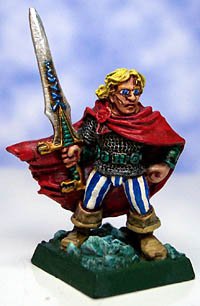
You can use not only sand, but small pieces of rock on your bases for variety.
Add Rocks to the Miniature Base
After applying glue to the base, drop small rocks onto it in a random fashion, moving them around as needed. For this part of the process, I prefer to use crushed coral. You can obtain this at any pet store which sells marine, or "salt water" fish. For around $10, I buy a 15 pound bag of crushed coral which should last me for a lifetime. The crushed coral has a natural, rough appearance. It often has little shells in it. Pick these out if you don't want it to look like your miniature stands on a seashore.
Wait 15 minutes for the glue to begin to fix the rocks in place. Then apply a small amount of glue to the base between the rocks. Now dip the bottom half of the figure in a box of coarse sand, or merely sprinkle it over the glued top surface. The sand will stick to the glue and remain in place.
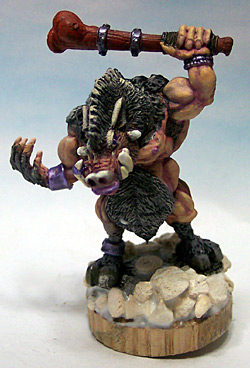
Step 1: Glue rocks and/or sand to base with white glue, such as Elmer's School Glue
Highlighting Miniature Base Rocks
Let the glue dry before going on. When the glue is dry you have a color decision to make.
My own preference is to start with a very dark green (Apple Barrel's Black Green). I highlight by highlighting in steps, mixing with a light color I've used elsewhere on the miniature, often a skin tone.
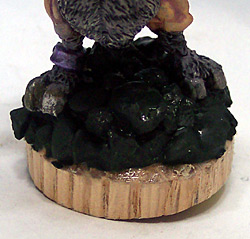
Step 2: Paint the entire base with a dark green color.
Highlight Rock Midtones
When this dries, drybrush with a lighter green, made from mixing even more highlight color with the previous color.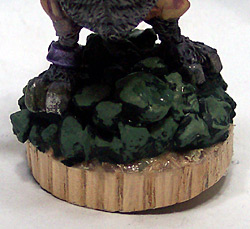
Step 3: Heavily drybrush with a medium green color.
Final Highlighting
Finally, add very sparingly the pure highlight color where light would most strongly illuminate the rocks.
If you have a wood base, such as the ones I use, you may want to apply a varnish or a stain to the wood portion of the base to keep skin oils from discoloring the wood when handled.
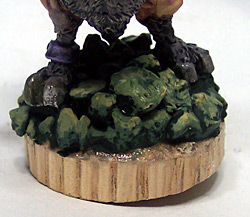
Step 4: Heavily drybrush with a light green color.
Realistic-Looking Base Terrain
Some enthusiasts use flock available at model train or hobby shops to get better appearance of grass or foliage, such as the all-in-one featured product shown.
When you are done, spray a light coat of sealer on the painted base to protect it from chipping and rubbing off due to handling of the miniature.
If you like the look of the oak base used on this miniature, click the link below to learn how to make them for under 25 cents each.
How To: Click to Learn How To Create attractive oak bases for less than 25 cents each